

We Are All Compromised
009 | Personal ethics in an amoral world

If you live in London, you have heard of Gail’s Bakery. Known for its gentrifying tendencies, the company has grown into 100+ bakeries all over London in the last few years. Its scale and expansion are fuelled by one culprit: private equity.
Crystal Palace, known for its mostly independent businesses, got a Gail’s in December 2025. Instagram posts from local businesses and articles were abound boycotting the chain as a scourge for independent cafes that dot the streets of my much loved neighborhood. There were two reasons why residents were up in arms: the first, as I mentioned, is that Gail’s is a known gentrifier. In London, where rents continue to be astronomically high, that is not a good thing. But the other reason is: Gail’s expansion has been funded by Bain Capital. Its venture arm, Bain Capital Ventures (BCV), has invested over $150 million in Israeli tech companies, including cybersecurity and software firms. As a liberal who is fiercely passionate about being on the right side of history, both are critical reasons for avoiding Gail’s. Except…

There are no decent croissants in Crystal Palace. The baked goods scene on the high street is largely abysmal (I recognise this may garner me abuse from South London readers – I accept the risks of this claim). Gail’s represents consistency. I will get a good croissant. This is important as I’m nearly seven months pregnant and I want to eat croissants like it’s my job. Yet here we are. Gail’s is funded by an unethical private equity firm and raises housing prices where affordable housing is a problem – all as part of their growth strategy. Crucially, Gail’s backer is complicit in genocide. Simultaneously, the bakery is rewarded with consistently high sales despite its negative press – because we live in a capitalist contradiction where the many orthodoxies we held dear (like that Israeli occupation is “complicated”, centrist policies have the widest tents, all brands have an authentic role to play in culture and other delusions) continue to be rewritten everyday. This is the crux of Legit.
The ethics, beliefs, dogmas, and opinions I held dear for most of my life have been coming undone for years. And I am not the only one. I’m finding it more challenging to live my values in a time of polycrises, as are my friends.
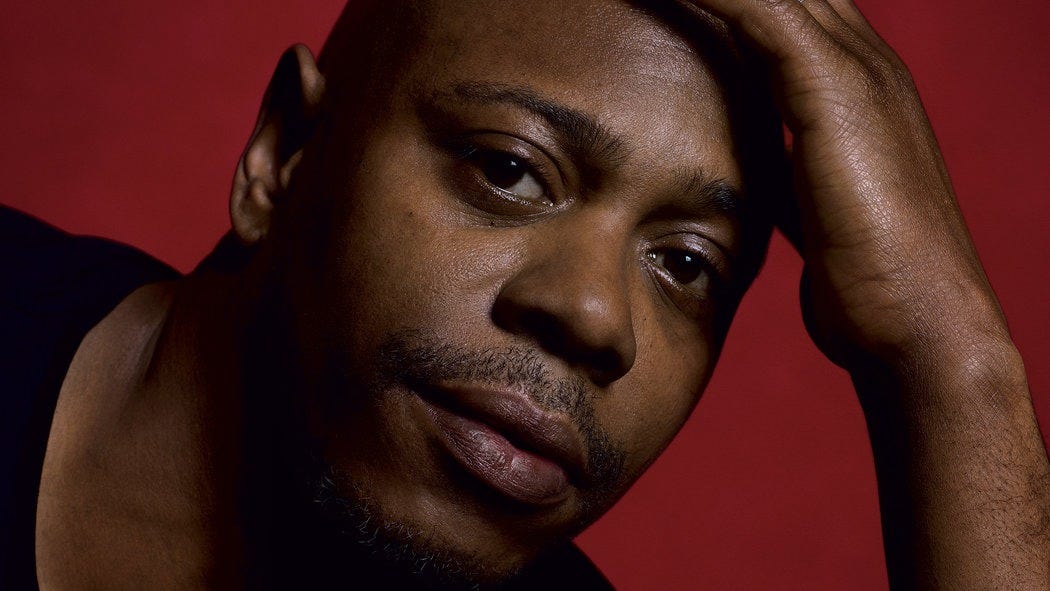
Last year, a couple of friends told me they were attending an event in Saudi Arabia, and were going to accept the generous payment that came along with the invitation. Once upon a time, I would have gone in strong: “What about Jamal Khashoggi? They’re trying to normalise relations with Israel!” Then again, as Dave Chappelle pointed out in his most recent comedy special, Saudi Arabia murdered one journalist whereas, by December 2025, Israel had murdered 260, all with full support of the U.S. and UK governments, both of which I am a citizen. And the media industry in the U.S. has been cratering post-COVID and strikes, moving opportunities abroad. And “abroad” is not going to be a utopia because this doesn’t exist.
I’ve also noticed former colleagues moving to OpenAI. Initially, I’d be lying if I wasn’t judgy based on the bad press Sam Altman and the company more broadly get. But would it be better if these folks all moved to Anthropic instead? Sure, the latter has better PR and has demonstrated more ethical training of LLMs. But don’t both companies usurp an ungodly amount of energy and resources to fuel their growth? Is it worth holding others to a standard about where they work when I am using their company’s products? I refrain from using AI platforms as much as possible so as not to atrophy the mind, but I’d be lying if I said I didn’t use Claude and Gemini. The latter is now integrated into most of Google’s products anyway, of which I am a user (full disclosure: I also worked there from 2017-2019), so the futility of abstention is clear.
Since leaving Google, I have been intentional about which clients and challenges I take on. I came to realise that, like attention and consumer spending, my time and ethics are the only other assets I can control. So I have focussed on clients that are looking to advance a cause as well as themselves. Or at the very least, avoiding clients who are not trying to actively “______wash” their deeds. And I too have compromised my values in the face of financial insecurity. Working for myself is a boom and bust business, so I once agreed to work with a confectionary company who insisted their product had nutritional value and wanted to market this in the context of children and sports – when it was abundantly clear to everyone involved that this was untrue and unethical. Luckily, the project failed because it was a dead-end to begin with, but did I take their money? Yes. Yes I did.
From institutions to leaders to countries, no one is pretending to be good, righteous, or morally justified anymore. Trump invaded Venezuela and kidnapped its much maligned leader Nicolás Maduro (yes, he was corrupt, but also was the successor to a successful socialist revolution). Greenland is likely next and with its annexation goes the NATO alliance. The Ellisons are trying to control U.S. media and TikTok to change the negative narratives around Israel, environmentalism and other important issues with the support of Bari Weiss, the new head of CBS. In the UK, right wing politicians, including our “left wing” Prime Minister Keir Starmer, are hell-bent on getting rid of immigrants (specifically POC ones) despite an aging population and unproductive and unemployed young ones. The masks and gloves have come off all around us. Should we stop pretending too?
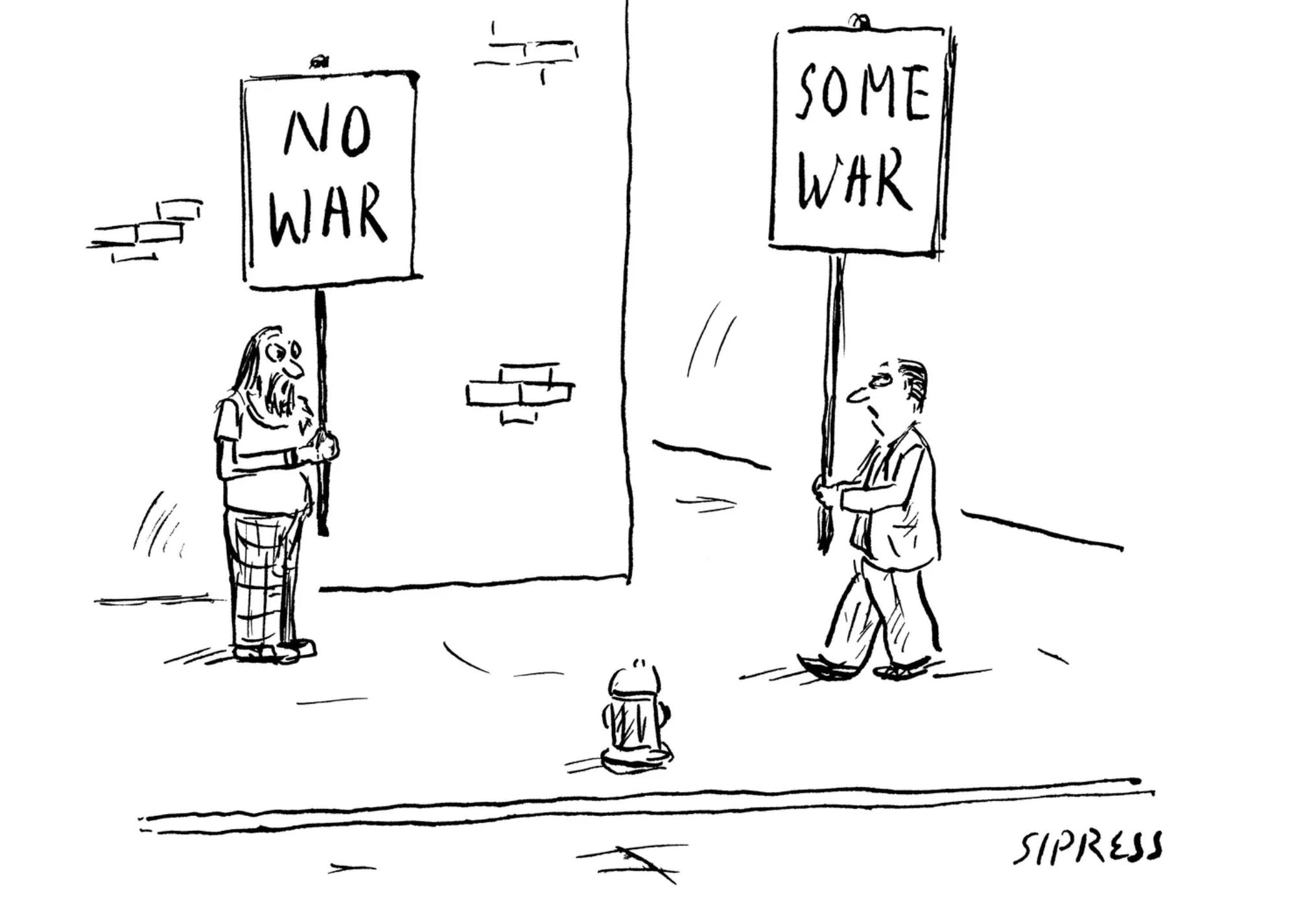
Many of us aspire to a morality that is impossible to fully abide by: a recent NPR poll showed that 61% of people said the US should be a moral leader, but only 39% said it is (down from 60% in 2017). America’s morality has arguably always been a delusion, but its aspiration remains. The fact is we live in an extremely compromised and compromising world. Where we spend our money, how and where we direct our time and attention, and how we earn our incomes are all connected; following the money honestly would demand significant life changes and a letting go of many comforts we now take for granted. Most of us have the will, but we need help finding the way.
I see a few paths forward:
Abandon any sense of ethical and moral quandary about the choices you make. Hell, as far as we know, there’s only this life to live.
Don’t overthink it: you’re not a murderer, thief, homophobe, racist, misogynist, or evil, so who cares where you shop, eat, work, and play? As long as you’re not hurting anyone, you’re good.
Observe, assess, practice: You’re in the B) camp, but it doesn’t feel like that’s enough. You understand you are imperfect, but you’re not giving up on people or the planet.
If you identify with (3) (I do), then here’s how I’ve been thinking about aligning on where we want to put our energies to lessen harm and live values we can realistically stand by:
How we earn
Most of us are out here trying to survive. But does that give us a blank check to work for corrupt, ill-meaning, greenwashing or cause-washing corporations or organisations? Depends on your ethics. Consider the cost and benefit analysis of what you earn, how you do it, and who you do it with, or for. Are there alternatives? Or can you offset the harm your employer or client causes with a personal investment in its solution? Is this the only job or client you can have? Only you can answer that.
Where we spend attention
These are content platforms, publishers, social media and AI companies. Find out who they’re owned by, the companies’ practices…and then assess how much time and attention you are willing to give them. Every scroll is a minute, or million, in Mark Zuckerberg’s or Elon Musk’s lobbying machine to not pay tax, moderate content, or take responsibility for political disinformation and chaos.
How, and where, we spend money
We know that boycotts have an impact (think Starbucks and Coca-Cola for Gaza, the end of South Africa's apartheid). But we can’t boycott everyone. Identify the causes you really, truly care about, and find out the commercial and cultural goods you are willing to do without. Most causes are intersectional – the climate crisis is connected to genocide – so consider how and where you travel, what you consume, and how often. Give yourself grace, but also identify standards you’re actually willing to adhere to, and adjust accordingly.
Who we listen and learn from
If we are what we consume, then we are who we admire. Think about the people who shape your opinions, from people in your immediate circle to authors, politicians, sports stars, celebrities, you name it. What binds the people you look up to? Who is missing? How can you benefit, or not, from views you do not agree with? Interrogate this and learn from it.
All of these levers should be underpinned by curiosity, research and reflection. We live in a time of quick hits of “learning” - aka a quote on Instagram or a video on TikTok. These have their place, but they’re not deep knowledge. Our oppression and control relies on the dumbing down of our societies, so one of our greatest resources for resistance is education. That curiosity will teach you about the interconnectivity of the causes and topics that rile you up, and most importantly, show you the opaqueness of history and people. It’s all messy and imperfect because that is what we are.
Remember: it’s not only about what choices you can live with, but also the ethics you want to live by. 2026 is our year. And so far, I have yet to go to Gail’s in Crystal Palace, or anywhere in London, because I trust I will find a better croissant elsewhere.
🔗 Legit links
📹 Dave Chappell criticizing the critiques of his Saudi show - An acerbic and astute takedown of progressivism’s hypocrisy
📖 Hugo Chavez: The Definitive Biography of Venezuela’s Controversial President
by Alberto Barrera Tyszka and Cristina Marcano (2007) - The definitive biography and an intimate portrait of one of the 20th Century’s most divisive political leaders
📰 The billionaire family poised to rewire U.S. media in Israel’s favor (+972 Magazine, Dec 2025) - A terrifying rundown of the Ellison’s family intents in reshaping the American media landscape
That was a fantastic piece and leaves a lot to think on and ponder.
Will be one I come back and read again, I imagine.
Great post and absolutely thought provoking. I think in many ways this question hinges on if ethics are relative or absolute. Along with that is the question of accountability - is it simply holding yourself responsible, is it to your “tribe”, your country, the world or the Divinity you pray to? If you hold yourself accountable to nothing then the question of ethics becomes trivial. The very fact we exist in itself does environmental damage every day we breathe, but does that mean we stop breathing :-). I always return to the famous quote from Howard Zinn: “If we remember those times and places—and there are so many—where people have behaved magnificently, this gives us the energy to act, and at least the possibility of sending this spinning top of a world in a different direction. And if we do act, in however small a way, we don’t have to wait for some grand utopian future. The future is an infinite succession of presents, and to live now as we think human beings should live, in defiance of all that is bad around us, is itself a marvelous victory.” In my opinion, it’s what you hold yourself accountable to and recognize that in the final equation that is what truly matters.